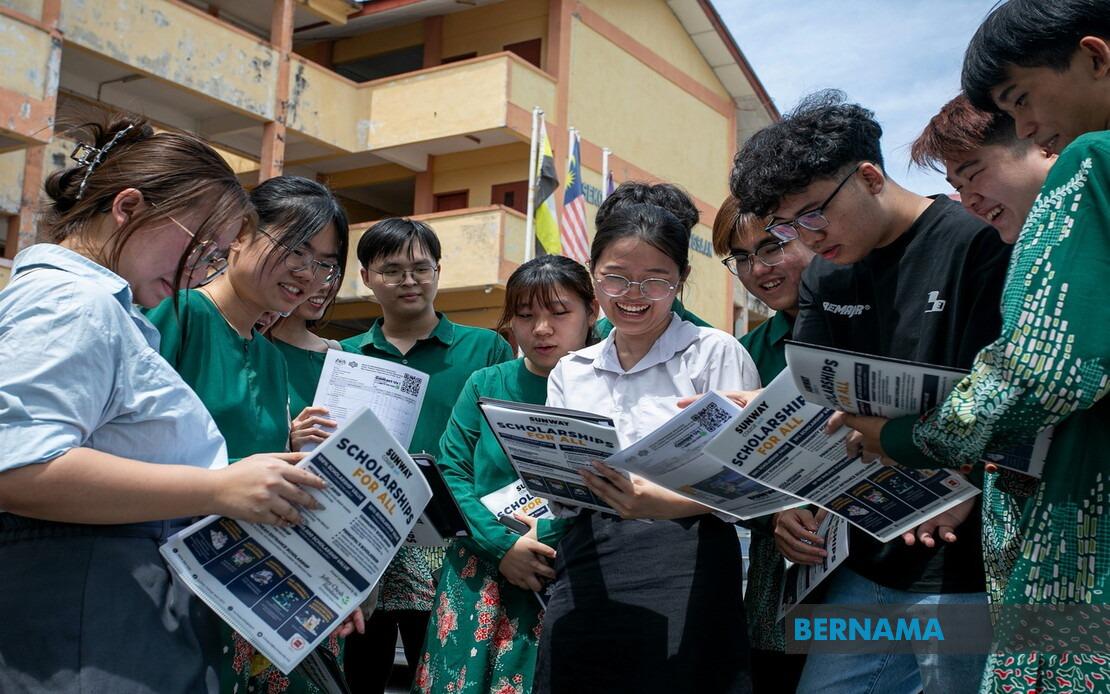
Malaysia's Sijil Tinggi Persekolahan Malaysia continues to establish itself as a credible and increasingly attractive option for secondary school leavers seeking entry to university, with recent high-achievers demonstrating the qualification's broad appeal across different socioeconomic backgrounds and student circumstances. The Malaysian Examinations Council recognised excellence at its headquarters in Kuala Lumpur on June 18, celebrating several students who attained perfect 4.00 Cumulative Grade Point Averages in the 2025 STPM examination, each representing a different dimension of the qualification's value proposition.
Hazaril Hakimi Hassan, an Orang Asli student from Kampung Paya Mendoi in Kuala Krau, Pahang, exemplifies how Form Six can serve as a transformative educational opportunity for students from marginalised communities. His journey underscores a critical messaging challenge that STPM faces: many capable students remain unaware of the pathway's genuine advantages until late in their secondary schooling. Hassan credits his breakthrough to discovering these benefits alongside sustained encouragement from both educators and family members, a combination that ultimately steered him toward academic excellence. Studying at SMK Temerloh, he now aims to read Malay Language Education at Universiti Putra Malaysia with aspirations to eventually lecture in the field, positioning STPM as a route not merely to employment but to professional advancement and intellectual contribution.
The financial accessibility of STPM emerges as a substantial factor distinguishing it from competing pathways in Malaysia's diverse educational landscape. Ng Yu Yong from SMK Tsung Wah in Kuala Kangsar, Perak, explicitly identifies cost considerations as a meaningful advantage, arguing that Form Six represents a significantly more economical option for families facing financial constraints. Beyond affordability, however, Ng articulates a conviction that STPM develops sharper academic competitiveness compared to alternatives, positioning students more advantageously for pursuing demanding fields such as medicine. His achievement of five distinctions, including top grades in Physics and Biology, provided the foundation for his application to read Medicine and Surgery at Universiti Malaya, demonstrating that STPM credentials remain competitive for entry into Malaysia's most selective university programmes.
International recognition of STPM qualifications extends its utility beyond the Malaysian higher education system, opening pathways to universities abroad that might otherwise require additional examinations or qualifications. Students completing STPM gain eligibility to apply directly to leading foreign institutions without needing to undertake separate entrance examinations, a practical advantage that Ng emphasises when encouraging junior students to select the Form Six route. This international portability makes STPM particularly valuable for ambitious students whose career trajectories might lead them overseas or who wish to maintain the option of studying internationally without incurring additional qualification costs.
Inclusivity within Malaysia's educational system has long presented challenges, particularly for students with disabilities navigating standard curricula and examination formats. Yeoh Chwen Yih, a visibly impaired student at St John's Institution, represents a crucial constituency whose successful navigation of STPM merits wider recognition and discussion. For many visually impaired learners, educational options contract significantly; Form Six institutions have progressively implemented screen-reading technology and digital learning support systems that can enhance accessibility more effectively than Braille materials alone. Yeoh notes that such software enables faster access to learning materials, thereby improving the pace and overall effectiveness of study, while simultaneously reducing reliance on resource-intensive Braille production.
The implementation of assistive technology within Form Six environments reflects broader institutional evolution toward genuine inclusion rather than mere accommodation. Screen readers allow visually impaired students to engage independently with digital learning materials, fostering autonomy and self-directed study patterns essential for university-level work. This technological infrastructure becomes particularly significant given that universities themselves increasingly adopt digital learning platforms; students who develop proficiency with assistive technology during STPM transition more smoothly to tertiary education settings. Yeoh's ambition to pursue law study, viewed as achievable through STPM preparation, suggests that the pathway accommodates even demanding programmes previously perceived as inaccessible to students with certain disabilities.
The diversity of professional ambitions among these high-achieving students reveals STPM's applicability across the full spectrum of university disciplines and career pathways. Whether pursuing education, medicine, or law, these students utilised STPM as a platform for targeting their chosen fields with deliberate academic strategy. Hassan's focus on language education reflects Malaysia's ongoing need for qualified educators in this area, particularly from diverse ethnic backgrounds that strengthen pedagogical representation. Ng's medical aspiration addresses persistent healthcare workforce development concerns that Malaysian policymakers continue to prioritise. Yeoh's legal aspirations contribute to the expanding pool of disability-inclusive professional voices within Malaysia's legal sector. Each trajectory demonstrates that STPM facilitates not merely general university access but targeted pursuit of specific professional callings.
The psychological dimension of student confidence and motivation deserves attention in discussions of educational pathways. Hassan explicitly credits growing confidence once he understood Form Six advantages, highlighting that awareness and affirmation substantially influence educational choices among secondary school students. Many Malaysian families remain anchored to perceptions of STPM as a less prestigious alternative to other routes, a perception gap that recognition of excellence helps gradually erode. When visible success stories emerge from diverse backgrounds, they signal to younger cohorts that capability rather than background determines STPM outcomes.
Comparative analysis of Malaysian education pathways reveals STPM's particular strength for students whose circumstances favour a two-year concentrated academic programme over longer, potentially more expensive alternatives. Beyond raw cost calculations, the pathway aligns study duration with maturation timelines that suit many adolescent learners, allowing intellectual development within a defined structure. The qualification's design emphasises deep subject engagement rather than broad curricular coverage, preparing students effectively for specialised university study.
Implications for Malaysia's human capital development merit consideration. These high-performing STPM graduates—an Orang Asli student, a Chinese Malaysian, a visually impaired learner—represent precisely the demographic diversity that strengthens national talent pipelines and professional representation across sectors. Supporting and expanding STPM remains strategically sound given its demonstrated capacity to develop excellence among underrepresented communities while maintaining cost accessibility. The Malaysian Examinations Council's public recognition of these achievements contributes to normative shift in how society perceives Form Six, gradually repositioning it from perceived fallback option toward recognised excellence pathway.


