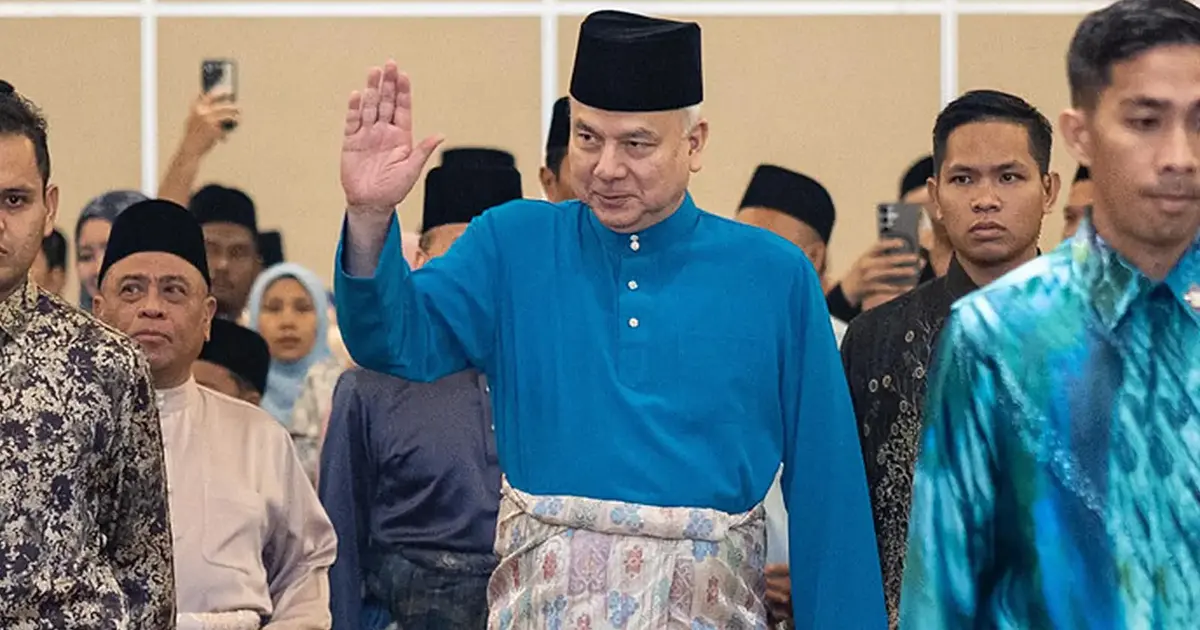
Malaysia's Deputy Agong, Sultan Nazrin Shah, has issued a pointed reminder to the nation's leadership that sound governance requires measured deliberation rather than reactive impulse. Speaking to concerns about decision-making at the highest levels, the royal figure underscored the critical distinction between passion-driven choices and thoughtful, strategic direction-setting that serves the broader national interest.
The caution reflects an underlying anxiety in Malaysian political circles about the pace and nature of policy announcements and governmental shifts. When leaders succumb to emotional pressure or personal conviction without adequate consultation or deliberation, the consequences often ripple through institutions, the economy, and society at large. Sultan Nazrin's intervention suggests a recognition that Malaysia's complex, multicultural landscape requires leadership rooted in calm assessment rather than knee-jerk reactions to events or political dynamics.
Central to the Deputy Agong's message is a philosophy that national advancement rests upon a foundation far broader than individual leaders or governing parties. He highlighted the essential role of the citizenry itself—their preparedness to work collaboratively across dividing lines, their commitment to mutual regard regardless of background or belief, and their capacity to coexist peacefully despite inevitable differences. This framing places responsibility squarely on both the governed and those who govern.
The emphasis on cooperation carries particular weight in Malaysia's context. The nation's constitutional structure, demographic composition, and federal arrangement all depend on delicate balances and understandings between communities, states, and institutions. When leadership becomes erratic or emotionally charged, these equilibriums can shift dangerously. Investors grow uncertain, bureaucratic machinery falters, and ordinary citizens lose confidence in the system's stability. By contrast, predictable, reasoned governance attracts confidence and allows communities to focus energy on productivity and social cohesion rather than crisis management.
Respect among citizens forms another pillar of Sultan Nazrin's vision. In a nation home to Malays and Bumiputeras, Chinese, Indians, Orang Asli, and numerous other groups, as well as significant religious and philosophical diversity, genuine respect across these lines is not ornamental—it is functional. When respect erodes, replaced by suspicion or contempt, the social contract weakens. Leaders who deliberately inflame tensions or exploit divisions for short-term political gain may secure immediate advantage but undermine the very conditions their continued authority depends upon.
Harmonious coexistence, the third element the Deputy Agong named, speaks to an aspirational but achievable standard. Malaysia has periods of genuine intercommunal peace and collaborative achievement; it has also experienced serious episodes of breakdown. The trajectory is not predetermined. Political choices matter enormously. Leaders who prioritise stability and dialogue over confrontation and point-scoring help steer the nation toward the former path. Those who do the opposite risk triggering cascading instability.
For Malaysian readers and regional observers, Sultan Nazrin's words carry additional resonance given Southeast Asia's broader context. The region contains several democracies and constitutional monarchies wrestling with questions of governance, institutional strength, and social fragmentation. When leaders in any Southeast Asian nation demonstrate restraint and commitment to constitutional process over personal ambition, the entire region benefits from the implied message that such conduct is both possible and valued. Conversely, political crises marked by impulsive or emotional decision-making create ripple effects across borders, affecting investor confidence, regional security arrangements, and diplomatic relationships.
The timing of the Deputy Agong's remarks also suggests awareness of specific contemporary pressures within Malaysian politics. Whether related to recurring cabinet reshuffles, policy shifts, or broader questions of political direction, Sultan Nazrin appears to be signalling that the nation's leadership tier must resist tendencies toward instability. This is not a call for stagnation or for leaders to abdicate decision-making; rather, it is a call for such decisions to emerge from process, consultation, and careful assessment of consequences.
The role of Malaysia's constitutional monarchy in maintaining these kinds of standards should not be underestimated. While the Agong and his Deputy remain above partisan politics, they occupy a position of significant moral authority and custodianship over the nation's fundamental law. When they speak, they do so not as political actors but as guardians of constitutional propriety and national wellbeing. This status lends their words weight that purely political figures cannot command.
Implementing such counsel requires genuine commitment from Malaysia's political class. It means resisting pressure from party factions to make hasty announcements or reverse course constantly in response to opinion polls or media cycles. It demands that Cabinet ministers, parliamentary leaders, and state administrators take longer views and think seriously about downstream consequences of their actions. It also requires transparency and communication so that the public understands the reasoning behind decisions, building confidence rather than confusion.
The Deputy Agong's broader vision ultimately rests on a conviction that Malaysia's strength lies not in the decisiveness of any single leader but in the maturity and cohesion of the entire national community. When that community functions well—when citizens respect one another, cooperate despite differences, and live together peacefully—the nation can weather challenges and pursue opportunities effectively. When it fractures, even the most decisive leader cannot restore health through force of will alone.
As Malaysia continues navigating complex challenges ranging from economic restructuring to demographic change to regional security concerns, Sultan Nazrin's reminder serves as an essential touchstone. The path forward requires not just intelligence or ambition from leadership, but wisdom—the capacity to see beyond immediate pressures and act in ways that strengthen rather than weaken the bonds holding the nation together. In that sense, his words constitute not merely advice but an invitation to a higher standard of public service.