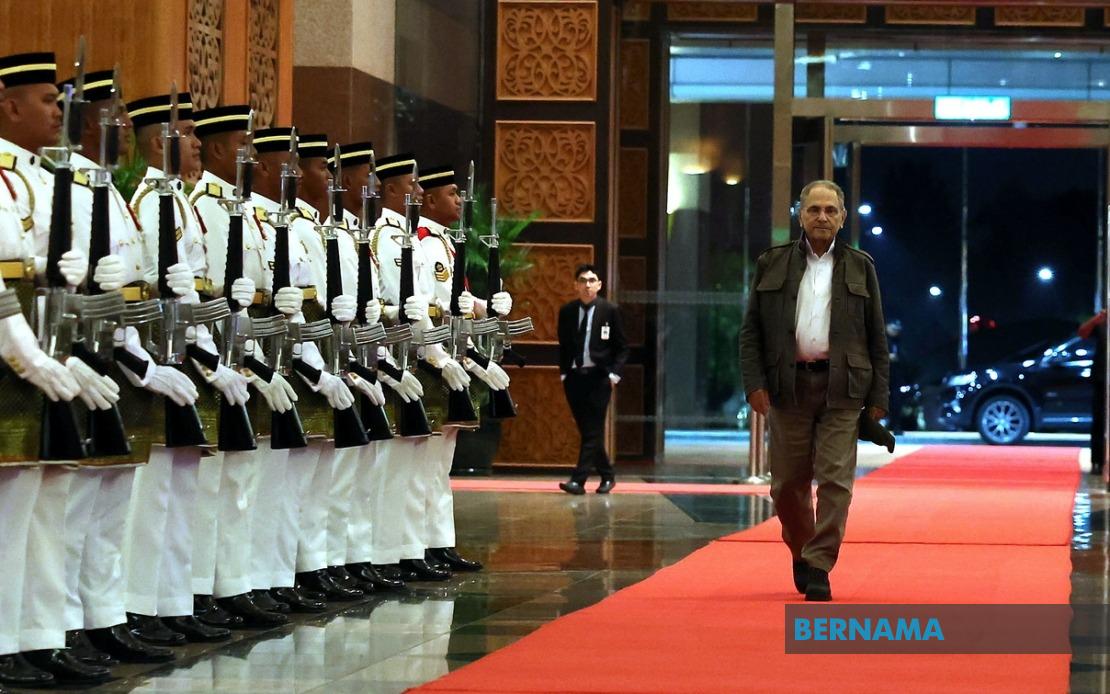
Timor-Leste President Jose Ramos-Horta departed Malaysia early on June 17 after a five-day special visit aimed at deepening bilateral ties and advancing regional cooperation. The Nobel Peace Prize laureate, accompanied by his delegation, boarded a Batik Air flight from Kuala Lumpur International Airport Terminal 1 at 2.15 am, concluding discussions that highlighted the warmth and substance of relations between the two Southeast Asian nations.
The departure was marked by formal protocol, with Ramos-Horta receiving a Guard of Honour comprising officers and personnel from the First Battalion Royal Ranger Regiment upon his final arrival at the airport. The ceremonial farewell underscored the diplomatic importance both nations place on their relationship, which has grown significantly since Timor-Leste's independence in 2002.
During his time in Malaysia, Ramos-Horta participated in a high-profile dialogue session on June 15 titled "A Changing World, Enduring Values", where he publicly characterised bilateral relations as "exceptionally good". His remarks reflected satisfaction with Malaysia's trajectory in security, democratic governance, and economic advancement—areas where the neighbouring nation has demonstrated notable progress in recent years and which hold relevance for Timor-Leste's own development aspirations.
A significant dimension of the visit centred on Malaysia's substantial historical and ongoing support for Timor-Leste. Ramos-Horta acknowledged Malaysia's critical role during the transition period leading up to independence, including peacekeeping contributions in 1999 when the newly sovereign nation faced considerable challenges. This recognition of Malaysia's commitment extends to more recent institutional support, particularly Malaysia's decisive backing for Timor-Leste's accession to the Association of Southeast Asian Nations, which culminated in formal membership on October 26, 2025.
The timing of Malaysia's chairmanship proved fortuitous for Timor-Leste's ASEAN aspirations, and Ramos-Horta's gratitude during the visit underscores how bilateral relations translate into tangible regional outcomes. Timor-Leste's entry as ASEAN's 11th member represents a watershed moment for the nation, integrating it fully into regional frameworks for trade, security cooperation, and multilateral engagement that had previously been partially restricted.
Looking ahead, Ramos-Horta expressed confidence in Timor-Leste's capacity to fulfil the prestigious responsibility of hosting ASEAN in 2029. The nation is accelerating infrastructure and facility development to meet the exacting standards required for such a major regional gathering. This ambition reflects not merely logistical preparation but also Timor-Leste's determination to demonstrate its readiness for elevated regional leadership roles following recent membership accession.
On the economic front, the visit yielded important diplomatic messaging regarding investment opportunities in Timor-Leste. The President invited Malaysian investors to examine prospects within the country's infrastructure sector, emphasising several competitive advantages that distinguish Timor-Leste from regional peers. The nation maintains a relatively modest debt burden and possesses a robust sovereign wealth fund, both of which provide financial buffers for sustained development initiatives. Additionally, multilateral financing institutions have signalled support for Timor-Leste's development trajectory, creating a favourable environment for international capital flows.
Prime Minister Datuk Seri Anwar Ibrahim hosted an official luncheon honouring Ramos-Horta at Seri Perdana Complex, providing a platform for substantive bilateral discussions. The two leaders engaged in detailed exchanges regarding expansion of cooperation across multiple dimensions: trade architecture, direct investment flows, human capital development initiatives, educational partnerships, and technical training programmes. These conversations reflect an intent to broaden the relationship beyond ceremonial engagement into practical, mutually beneficial collaboration.
The current bilateral trade profile, while modest in absolute terms, provides a foundation for expansion. In 2024, Malaysia-Timor-Leste trade reached USD18.72 million, with Malaysian exports comprising USD18.37 million and imports from Timor-Leste totalling USD0.35 million. The imbalance underscores significant untapped potential, particularly in Timor-Leste's capacity to increase exports to Malaysian markets. As Timor-Leste develops its non-oil sectors and Malaysian businesses explore investment opportunities in infrastructure, this trade asymmetry may gradually shift, creating more balanced commercial flows that benefit both economies.
For Malaysian policymakers and businesses, Timor-Leste's ASEAN membership and development trajectory represent a new avenue for regional economic engagement. The nation's geographic proximity, resources, and strategic location on major shipping lanes make it increasingly relevant to Malaysia's broader Southeast Asian strategy. The combination of Malaysian investment in infrastructure, technical cooperation in governance and capacity building, and educational exchange programmes could position Malaysia as a preferred development partner while generating returns through improved market access and enhanced regional stability.
The visit also carries implications for ASEAN's institutional development and cohesion. Timor-Leste's integration requires investment from existing members in mentorship and integration support. Malaysia's visible commitment during its chairmanship and beyond demonstrates the kind of institutional leadership that strengthens ASEAN's credibility as an inclusive regional organisation. Ramos-Horta's public endorsement of Malaysian achievements provides reciprocal diplomatic value, acknowledging Malaysia's contributions while strengthening interpersonal bonds between leadership elites.
As Ramos-Horta returned to Dili following the five-day engagement, both nations could assess the visit as substantively productive. Beyond ceremonial exchanges, concrete discussions occurred regarding investment corridors, ASEAN integration support, and specific development cooperation frameworks. The clarity with which both leaders articulated shared interests—from regional stability to economic complementarity—suggests that Malaysia-Timor-Leste relations will likely deepen measurably over coming years, particularly as Timor-Leste settles into its enhanced ASEAN role and pursues the ambitious 2029 ASEAN hosting objective.