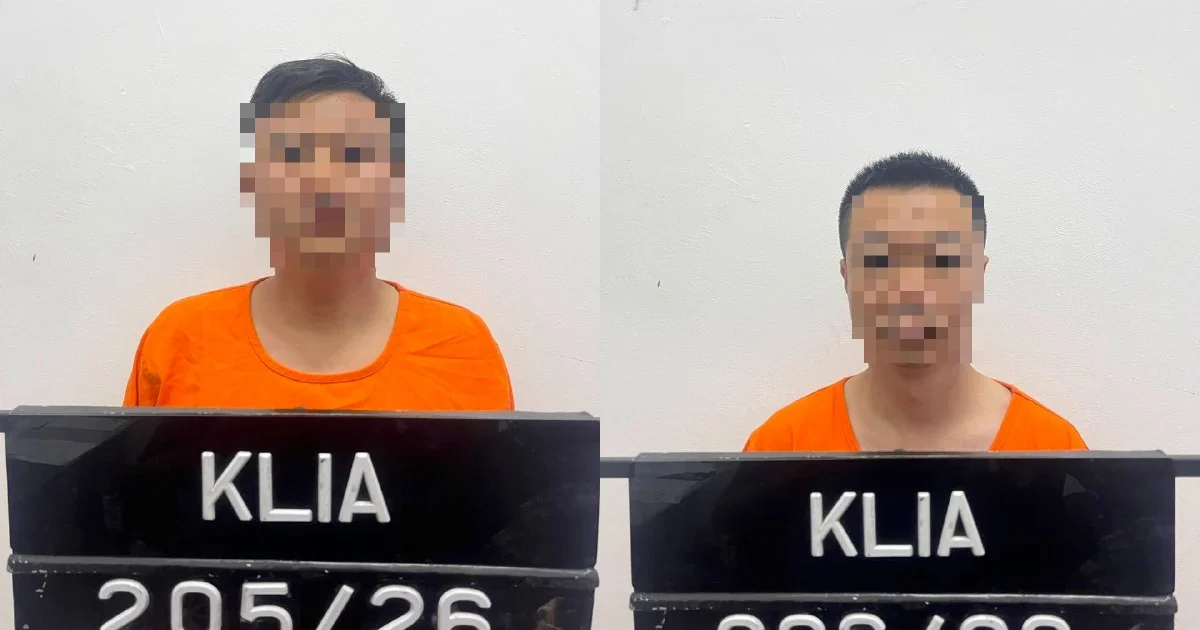
Two men from China are being held in custody at the Sepang police headquarters following their arrest in relation to a suspected theft attempt that occurred during a commercial flight departing from Dili, Timor-Leste, and bound for Kuala Lumpur International Airport. The pair was remanded for a four-day period beginning immediately to enable investigating officers to conduct a thorough examination of the circumstances surrounding the alleged incident.
The arrest represents a notable development in aviation security protocols within Malaysian airspace, where in-flight criminal activity remains a persistent concern despite stringent safety measures. The Dili to KLIA route is frequently utilised by travellers and cargo operations, making this incident particularly significant for the regional aviation industry and passenger safety considerations.
Investigating officers are pursuing multiple lines of inquiry into the alleged attempted theft, working to establish the exact sequence of events that unfolded during the flight. The remand period allows authorities to conduct detailed interviews with the suspects, examine evidence gathered at the scene, and reconstruct the circumstances that led to their apprehension. Such investigations typically involve coordination between Malaysian police, airport authorities, and potentially the airline operator and aviation regulators.
The timing of the incident and subsequent arrest highlights the ongoing vigilance required by aviation security personnel and cabin crew across Southeast Asian airspace. Airlines operating regional routes must balance passenger comfort with security protocols, and incidents of this nature underscore the critical importance of crew training in identifying and responding to suspicious behaviour at high altitude.
For Malaysian travellers and the broader regional aviation community, this case reinforces concerns about in-flight security despite existing measures such as passenger screening, baggage checks, and cockpit fortification. The incident may prompt airlines and airport operators to review current procedures and ensure crew are equipped to handle such situations effectively and safely, particularly on routes serving less heavily trafficked destinations like Dili.
The four-day remand period is standard practice under Malaysian criminal procedure, allowing investigating officers sufficient time to compile evidence, obtain statements, and determine whether charges will be filed or if the suspects will be released pending further inquiries. The outcome will likely depend on the nature and value of items allegedly targeted and the degree of premeditation investigators can establish.
Timor-Leste's relatively limited aviation infrastructure compared to other regional hubs means flights to major destinations like Kuala Lumpur serve a significant number of business travellers, government officials, and tourists. Any disruption to aviation safety or security on these routes carries implications beyond the immediate incident, potentially affecting perceptions of the airline's safety record and travellers' confidence in regional air services.
The involvement of Chinese nationals raises questions about whether the alleged theft was opportunistic or premeditated, and whether it forms part of any broader criminal network. Investigators will likely examine the suspects' travel histories, any prior involvement with law enforcement, and whether they were travelling together intentionally or met coincidentally aboard the aircraft.
Airlines operating in Malaysia and across Southeast Asia are accustomed to managing security incidents with professionalism and discretion, but high-profile cases such as this one inevitably draw public attention to aviation safety vulnerabilities. The response by Malaysian authorities will be closely watched by regional carriers and civil aviation bodies, who may use lessons from this incident to refine existing security protocols.
The four-day remand period represents a critical window during which the investigation will either build toward formal charges or establish that evidence is insufficient to proceed. Either outcome will carry implications for how Malaysian law enforcement approaches similar incidents in future, and may influence policy discussions at both national and regional levels regarding aviation security standards and crew training requirements.


