Hanoi police have formally charged two women with a sophisticated smuggling operation involving the illegal importation and domestic distribution of frozen chicken feet originating from countries grappling with active poultry disease outbreaks. The investigation revealed a deliberate scheme spanning from 2023 to 2026 in which hundreds of containers of the frozen product were brought into Vietnam under false pretenses, then diverted to an extensive network of food service businesses nationwide, generating substantial revenue while evading taxes and circumventing critical food safety regulations.
Nguyen Thi To Loan, 47, who directly managed ABF Food Import-Export JSC headquartered in Ninh Binh Province, and Trang Tuyet Ngoc, 45, serving as head of the assistant department at An Binh Group, have both admitted to all charges levelled against them. The two-person operation appears to have been highly coordinated, with Loan orchestrating the importation strategy while Ngoc oversaw the systematic distribution of contraband goods across multiple provinces and jurisdictions. Both suspects have offered full confessions to investigating officers, streamlining the prosecutorial process and indicating cooperation with authorities.
The scale of the illegal enterprise is staggering. Between 2023 and 2026, ABF imported a total of 339 containers of frozen chicken feet, with customs declarations falsely identifying the shipments as materials intended exclusively for processing and subsequent re-export. Vietnamese law explicitly prohibits the domestic sale of poultry products sourced from countries experiencing active poultry disease epidemics; such imports may only be processed and re-exported to other nations. The legal framework reflects serious public health concerns, as domestically consumed poultry products must originate from countries certified as disease-free to protect consumers and prevent disease transmission within the food supply chain.
Instead of adhering to these mandatory re-export requirements, Loan systematically redirected the frozen chicken feet into Vietnam's domestic market. Investigators uncovered evidence that Ngoc distributed more than 10,000 metric tonnes of the smuggled product to food-service businesses operating across multiple provinces including Hanoi, Cao Bang, Ninh Binh, Quang Ninh, and several others. This widespread distribution meant that restaurants, institutional kitchens, and food processors across the country unknowingly incorporated chicken feet from disease-endemic regions into meals and prepared foods, potentially exposing thousands of consumers to foodborne pathogens and zoonotic diseases.
The financial dimensions of the scheme underscore its deliberate nature. The total value of imported goods was calculated at over VNĐ347 billion, equivalent to approximately US$13 million. Critically, authorities determined that no import duties were paid on any of these shipments, allowing the smugglers to undercut legitimate importers and food processors by sidestepping taxation obligations. This tax evasion component compounds the charges, suggesting fraud on multiple regulatory fronts including customs law, food safety protocols, and revenue law.
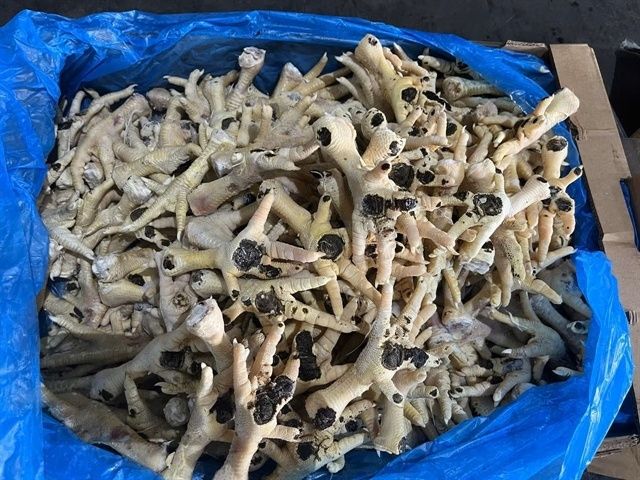
Large-scale raids on cold storage facilities linked to the operation revealed the infrastructure underlying this network. At the An Viet 2 freezer facility located in Hanoi's Quang Minh Industrial Zone, police discovered over 1,000 metric tonnes of frozen chicken feet in storage. More troublingly, approximately 260 metric tonnes of the seized product had exceeded its shelf life and displayed visible deterioration including mold growth and putrefactive odours, yet appeared to be prepared for distribution to unsuspecting customers. This discovery demonstrates not only violations of import and export laws but also flagrant breaches of food safety standards and potential violations of consumer protection regulations.
A subsequent raid at the THL cold-storage warehouse facility in Lang Son Province in the north uncovered an additional 1,030 metric tonnes of frozen chicken feet. The discovery of such enormous quantities at multiple facilities indicates that the operation maintained a sophisticated logistics network designed to store, manage, and distribute large volumes of contraband goods across Vietnam's expansive territory. The warehouse infrastructure suggests this was not an opportunistic or spontaneous violation but rather a meticulously planned enterprise with dedicated storage and distribution mechanisms.
The charges filed against both suspects fall under Article 188 of Vietnam's 2015 Penal Code, which addresses smuggling offences. This classification carries significant criminal penalties in the Vietnamese legal system and reflects the serious nature of the violations. By importing prohibited foodstuffs and evading customs controls, the defendants circumvented multiple layers of regulatory oversight designed to protect public health and maintain the integrity of international trade protocols. The smuggling designation acknowledges that the operation deliberately deceived customs authorities through false documentation and deliberate misrepresentation of shipment contents and intended purposes.
Hanoi police have indicated that their investigation remains ongoing, with authorities actively working to identify and establish the culpability of additional individuals and organisations potentially embedded within this smuggling network. The distributed nature of the operation—spanning multiple provinces, involving multiple warehouse facilities, and requiring coordination with numerous food-service businesses—suggests that Loan and Ngoc may have been operating as key figures within a larger criminal enterprise. Investigators are likely tracing financial flows, communications records, and supply chain relationships to determine the full extent of the conspiracy and the roles played by other participants.
The case carries significant implications for food safety oversight and regulatory enforcement across Vietnam and the Southeast Asian region more broadly. The successful concealment of this operation for several years suggests potential vulnerabilities in customs inspection procedures, cold chain monitoring, and inter-agency coordination regarding food product imports. For Malaysian food importers and consumers, the case underscores the critical importance of rigorous verification of supply chain origins and the necessity for robust documentation when sourcing poultry products from regional neighbours. The scheme demonstrates that determined operators can circumvent even explicit prohibitions on disease-endemic imports if regulatory mechanisms lack sufficient vigilance and inter-agency communication.