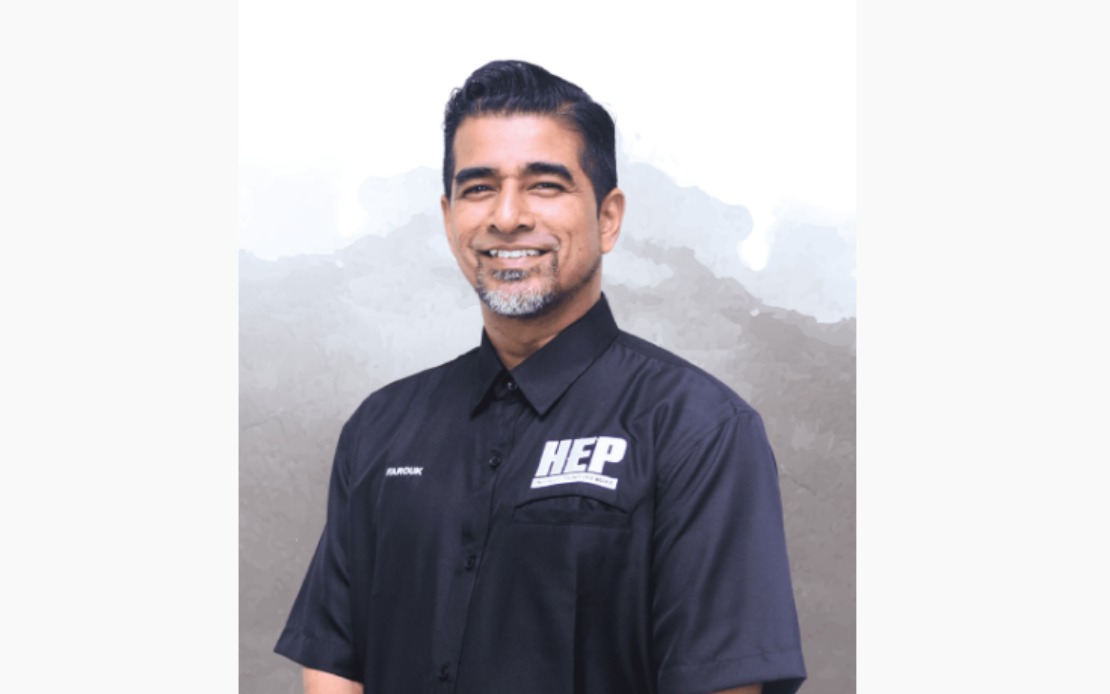
The Kelantan branch of Universiti Teknologi MARA is pushing back against a worrying trend of financially vulnerable students declining higher education offers, emphasising that institutional support systems exist to help them manage costs throughout their studies. Speaking at the UiTM Kelantan Branch Rector's Cakna Programme, Deputy Rector for Student Affairs Meer Zhar Farouk Amir Razli stressed that prospective students should thoroughly investigate available assistance mechanisms before turning down a place, as many are unaware of the full range of opportunities on offer.
The financial landscape for underprivileged Malaysian students extends well beyond conventional government loans. While PTPTN funding remains a primary pathway, UiTM Kelantan operates supplementary assistance schemes that directly target students facing genuine hardship. Meer Zhar outlined how the institution provides zakat assistance drawn from Islamic charitable contributions, operates dedicated welfare funds managed through student affairs departments, and implements the Dapur MADANI initiative specifically designed to stabilise living costs for residential students. These layered support mechanisms create a safety net that many prospective undergraduates do not fully comprehend before making rejection decisions.
The Dapur MADANI programme represents a particularly innovative approach to student welfare, operating from residential colleges to provide practical assistance with everyday expenses that can overwhelm low-income families. By targeting the living cost component—accommodation, meals, basic necessities—the initiative addresses the portion of tertiary education costs that often proves most daunting to families already stretched financially. This directly responds to a persistent challenge in Malaysian higher education: the gap between admission and enrolment rates among disadvantaged cohorts, where transport logistics, accommodation affordability, and day-to-day sustenance costs become decisive factors even after students have secured places.
The competitive landscape for public university places in Malaysia has intensified considerably, making each offer increasingly precious. With demand consistently outpacing available positions, turning down an offer without exhaustively exploring support options represents a potentially irreversible decision. Meer Zhar contextualised this institutional message within broader competition dynamics, noting that students who decline places forgo opportunities that might not materialise in subsequent application cycles. This economic reality underscores why pre-rejection consultation with university authorities has become essential; a conversation with student affairs offices could determine whether a student proceeds or abandons tertiary education entirely.
The Rector's Cakna Programme itself embodies this institutional commitment, representing collaborative work between UiTM Kelantan and local non-governmental organisations focused on identifying and supporting newly enrolled students facing acute difficulties. This partnership model taps into community networks to identify vulnerable learners early in their university journey, enabling proactive intervention rather than waiting for students to struggle academically or financially before seeking help. By connecting university support services with grassroots NGO knowledge of local family circumstances, the programme creates multiple access points for assistance.
Norzarra Dhania Amir Abdullah's experience illustrates precisely why this messaging matters for Malaysian families. At nineteen, Norzarra represents countless talented students whose educational trajectories hinge entirely on geographic and financial accessibility rather than intellectual capability. She had previously received an offer to study at UiTM Sarawak, but family circumstances made that opportunity impossible to pursue. Her household depends solely on her mother's income as a restaurant assistant, a precarious position exacerbated when her father's diabetes diagnosis four years ago eliminated his earning capacity. The eldest of seven siblings, Norzarra carries responsibility for her family's circumstances, a reality that transforms higher education from personal ambition into complex family economics.
When UiTM Kelantan offered Norzarra admission to a Diploma in Management programme, the calculus changed fundamentally. Geographic proximity to her family home meant reduced accommodation costs, eliminated relocation expenses, and permitted her continued contribution to household dynamics through occasional local income. This case demonstrates how the same institution offering multiple campuses can prove transformative simply through location options that account for socioeconomic realities. The laptop presented to her as part of the rector's initiative addressed immediate practical barriers—digital access for academic work—that low-income students often navigate without institutional acknowledgement.
Norzarra's own reflection on the experience emphasises how institutional flexibility can preserve educational dreams that otherwise dissipate. Her initial rejection of the Sarawak offer reflected not lack of aspiration but incompatible circumstances; the Kelantan placement restructured those circumstances into workable parameters. Her determination to pursue tertiary education persisted despite the initial setback, yet many students in parallel situations lack either Norzarra's resolve or the institutional outreach to learn that rejection need not be permanent. By actively engaging with prospective students through the Cakna Programme, UiTM signals that universities themselves bear responsibility for helping underprivileged students understand their realistic options.
For Southeast Asian higher education more broadly, this Malaysian institutional approach carries relevance. The region encompasses numerous countries where significant talent pools remain untapped due to financial barriers, and where institutional support mechanisms either do not exist or remain poorly publicised. UiTM Kelantan's model—combining multiple funding streams, geographic flexibility, and proactive community outreach—offers a replicable framework for universities facing similar challenges across the Association of Southeast Asian Nations. The emphasis on investigating options before rejection acknowledges practical reality: many families genuinely cannot afford to seek detailed information without institutional initiative, creating information asymmetries that disadvantage the most vulnerable applicants.
The underlying message from UiTM Kelantan targets not only individual students but broader family decision-making cultures. In many Malaysian households, particularly those experiencing economic hardship, educational decisions involve multiple family members weighing complex trade-offs between immediate survival needs and long-term mobility. When a family declines a university offer, that decision often reflects not just financial insufficiency but absence of confidence that support will materialise. By explicitly detailing available assistance and providing tangible evidence through the Cakna Programme, UiTM attempts to rebuild that confidence. The laptop given to Norzarra functions as material testimony that the institution backs its rhetorical commitment with actual resources.
This institutional positioning also implicitly critiques broader Malaysian policy frameworks. While PTPTN loans form the backbone of student financing, excessive reliance on debt-based support systems creates psychological and practical barriers for economically marginal families. Institutions must therefore supplement government mechanisms with charitable funding, welfare allocations, and practical assistance to reach students whom loan schemes alone cannot support. UiTM Kelantan's layered approach suggests that the difference between educational access and educational exclusion often depends on institutional initiative rather than government policy alone, placing responsibility on universities themselves to bridge financing gaps that policy leaves unaddressed.