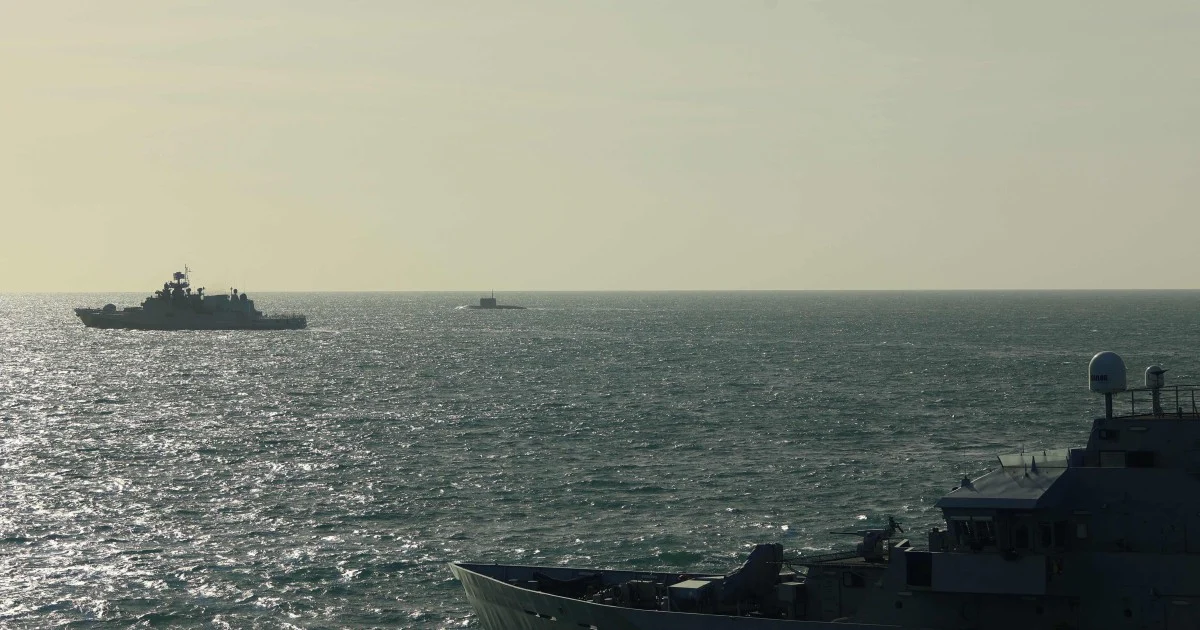
The dismissal by United Kingdom Prime Minister Keir Starmer of Russia's warning shots as reckless rather than intentionally provocative underscores London's carefully calibrated response to an incident that nevertheless exemplifies escalating tensions between the two nations at sea. When a Russian warship discharged warning shots near a civilian yacht navigating the English Channel on Wednesday, the incident triggered immediate scrutiny in Westminster and beyond, prompting Starmer to address the matter directly and define its character within a narrower framework than some security analysts might have preferred. By categorising the conduct as careless and dangerous while avoiding language that suggests calculated intimidation, the Prime Minister appeared intent on depressurising a situation that could otherwise spiral into deeper confrontation at a moment when Anglo-Russian relations remain historically fractured.
The English Channel, one of the world's busiest maritime corridors, has become an increasingly contested space where Russian military vessels regularly operate in a manner that Western nations regard as provocative or unsafe. The waterway connects the North Sea to the Atlantic Ocean and forms a crucial maritime artery for international commerce, naval operations, and civilian shipping across Northern European waters. The presence of Russian warships conducting exercises or transiting through these lanes has grown more frequent in recent years, particularly as Moscow seeks to project power and test the resolve of NATO members whose territories border these waters. Such operations have become a feature of modern great-power competition, wherein naval manoeuvres serve simultaneous purposes: demonstrating military capability, asserting access rights through international waters, and measuring Western response thresholds.
Warning shots represent a particularly fraught category of military action. Ostensibly intended to alert vessels to cease their course and comply with orders, such shots exist in an ambiguous middle ground between peaceful signalling and hostile action. The distinction between a reckless miscalculation and deliberate provocation matters considerably in international law and diplomatic practice. Starmer's framing—that the Russian warship acted carelessly rather than with malevolent intent—leaves open the possibility that the incident resulted from poor judgment, miscommunication, or operational procedures gone awry, rather than from a conscious decision to intimidate British or Western interests. This interpretation, whether accurate or diplomatic in nature, provides Moscow with a potential off-ramp from escalation whilst simultaneously documenting that such behaviour is unacceptable and cannot continue without consequences.
The incident reflects broader patterns of Russian military assertiveness in waters adjacent to NATO territory. The Russian Federation has consistently exercised its lawful right to navigate international waters, yet the manner and circumstances of such operations frequently concern Western governments. The English Channel specifically carries symbolic importance to Britain and Western Europe, representing a threshold of NATO's most densely populated territories and a vital commercial highway. Every Russian naval presence in these waters carries messaging value, and each Western response sets precedent for how future incidents will be handled. Starmer's measured language suggests the United Kingdom intends neither to escalate nor to be seen as capitulating, a delicate balance that has become routine in contemporary NATO-Russia interactions.
For Southeast Asian observers, this incident carries instructive implications about how maritime tensions between great powers are negotiated in practice. The region faces its own challenges regarding contested waters, freedom of navigation, and competing claims of military vessels operating in international spaces. Malaysia, with significant maritime interests throughout the South China Sea and Strait of Malacca, has reason to monitor how established maritime powers manage provocative incidents and maintain communication channels even amidst tensions. The way Britain responds to Russian naval behaviour may eventually influence how other nations approach similar challenges, particularly regarding the standards expected for safe and responsible military operations in shared maritime domains.
The broader context of Anglo-Russian relations remains decidedly adversarial. The poisoning of former Russian spy Sergei Skripal and his daughter Yulia in Salisbury, southwestern England, in 2018 catalysed a severe deterioration in bilateral relations that has never recovered. Subsequent allegations of Russian interference in British elections, disinformation campaigns, and the ongoing conflict in Ukraine have sustained British wariness toward Moscow. Within this environment of justified mistrust, incidents such as warning shots fired by Russian warships take on heightened significance, interpreted through a lens of accumulated grievances and demonstrated Russian willingness to operate without regard for conventional international norms. Nevertheless, Starmer's characterisation as recklessness rather than sinister design suggests an attempt to prevent such incidents from triggering military escalation whilst maintaining diplomatic channels for managing disagreements.
The UK military and government authorities will assuredly have documented the incident thoroughly, logging vessel identification, timing, location, weapons used, and vessel behaviour before and after the warning shots. Such documentation serves multiple purposes: establishing an evidentiary record for potential legal proceedings, informing future operational guidance for Royal Navy vessels, and creating a basis for diplomatic complaints to Moscow. The restraint shown in Starmer's public characterisation may mask considerable official concern and behind-the-scenes diplomatic activity to discourage repetition. Intelligence agencies in Britain almost certainly conducted detailed analysis to determine whether the warning shots represented standard operational procedure, unauthorised action by the warship's commander, or deliberate policy by Moscow. Only through such understanding can London fashion an appropriate response that addresses the immediate incident whilst signalling expectations for future conduct.
The incident also highlights vulnerabilities and dependencies inherent in Britain's post-Brexit maritime position. With full control over its territorial waters and exclusive economic zone, the UK now bears sole responsibility for maritime security and enforcement of international law within those zones. This requires sophisticated naval capabilities, intelligence apparatus, and diplomatic frameworks that extend far beyond territorial boundaries. Russia's repeated testing of British maritime patience appears designed partly to probe whether London possesses the will and capacity to maintain order in its own waters whilst managing relationships with a resurgent Russian military increasingly willing to operate in provocative ways. Starmer's response, characterising the action as reckless rather than sinister, may be intended to demonstrate that Britain takes the incident seriously without allowing it to derail larger strategic objectives or trigger unnecessary military escalation.
Looking forward, the English Channel will likely continue serving as a stage for Anglo-Russian competition. Every Russian naval transit through these waters remains a potential flashpoint, whilst British monitoring and response protocols will become increasingly refined. The question for London and other NATO members is whether incidents of this nature can be managed through diplomatic and legal frameworks or whether they represent harbingers of more serious confrontations. Starmer's attempt to define this incident narrowly as recklessness rather than strategic aggression suggests the British government believes such incidents can be contained through measured responses and clear communication of unacceptable behaviour thresholds. Whether that assessment proves correct will become evident through cumulative patterns of Russian behaviour and Western response over time.


