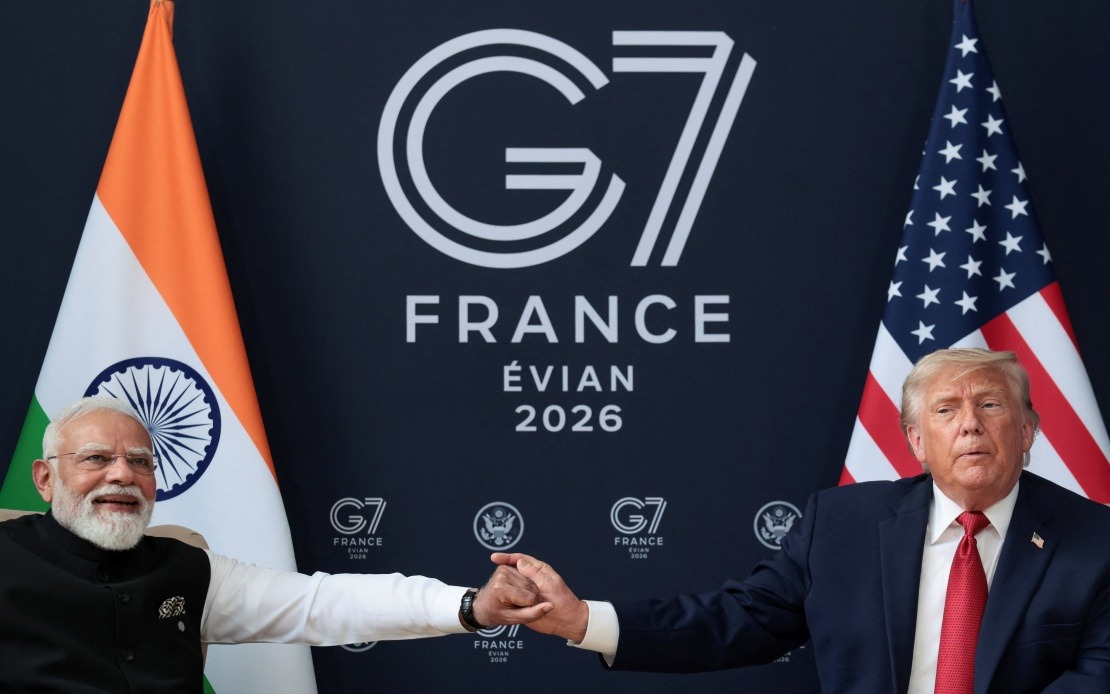
After months of protracted negotiations marked by tariff escalations and retaliatory measures, India and the United States have announced meaningful progress towards concluding a long-awaited bilateral trade agreement. The breakthrough emerged during a bilateral meeting between Indian Prime Minister Narendra Modi and US President Donald Trump held on the sidelines of the Group of Seven summit in Evian, France, on Wednesday, signalling renewed momentum in a relationship that had grown strained over trade disputes.
Both nations have instructed their negotiating teams to accelerate efforts in crafting what officials describe as a "balanced, mutually beneficial, and commercially meaningful agreement" that could be finalised in the near term. India's External Affairs Ministry released a carefully worded statement emphasising the leaders' "particular satisfaction" with the trajectory of talks towards an interim bilateral trade accord, language typically reserved for substantive diplomatic breakthroughs rather than routine progress updates.
The timing of this announcement carries weight given the turbulent backdrop to these negotiations. In 2025, the Trump administration imposed a 25 per cent tariff on Indian imports and added a supplementary 25 per cent penalty specifically targeting Indian purchases of Russian crude oil. These measures represented a significant escalation in trade friction between the world's oldest and largest democracies, placing considerable pressure on Indian exporters and manufacturers who depend on American markets. The concurrent tariff regime threatened to disrupt Indian supply chains and complicate commercial relationships that had taken years to develop.
To provide context for Southeast Asian observers, these trade tensions had rippled across the region, as Indian manufacturing and service sectors that feed into broader Asian value chains faced uncertainty. Companies across Malaysia, Thailand, Vietnam, and Indonesia rely on stable India-US trade relations, as Indian raw materials, pharmaceuticals, and business process outsourcing integrate into regional production networks. The tariff confrontation thus held implications extending well beyond bilateral commerce.
The interim trade agreement reached in February of this year provided temporary relief by reducing certain US tariffs to 18 per cent, offering breathing room for Indian businesses caught in the crossfire. However, that accord was always envisioned as a stepping stone towards a more comprehensive arrangement addressing deeper structural issues in bilateral trade relations. The current talks represent an attempt to move beyond temporary measures towards a durable framework that could govern commerce for years to come.
Trump's characterisation of Modi as "one of the toughest" negotiators underscores the contentious nature of these discussions. The US president's remarks, noting that Modi "looks like an angel" but proves "as tough as a killer," reflected both respect and the hard bargaining that had characterised these months of intensive negotiations. Such language, while colourful, conveyed the reality that neither side had been willing to capitulate on core interests, suggesting that any final agreement would require genuine compromise from both parties.
US Trade Representative Jamieson Greer is scheduled to visit India in the coming week to advance these discussions, indicating that technical teams remain actively engaged in resolving outstanding issues. Greer's visit will likely focus on granular details concerning tariff schedules, rules of origin, intellectual property protections, and sectoral exclusions that typically consume weeks of focused negotiation. For Indian stakeholders, his presence signals that American officials view an agreement as achievable within a reasonable timeframe.
The significance of progress in these talks extends beyond commercial metrics. India and the United States have been gradually strengthening their strategic partnership across defence, technology, and diplomatic domains. A successful trade agreement would reinforce these broader ties and demonstrate that the two countries can navigate economic disagreements without allowing them to corrode deeper strategic cooperation. For Southeast Asia, a strong US-India trade relationship supports the development of alternative supply chains and partnerships that could reduce regional dependence on any single trading partner.
However, substantial work remains before a final accord materialises. Negotiations between the US and India have historically foundered over agricultural subsidies, intellectual property regimes, and market access demands that pit American corporate interests against Indian development concerns. The services sector, where India possesses considerable competitive advantages, has been another contentious area, with the US seeking greater access to Indian markets while India pushes back against terms it views as overly restrictive.
For Malaysian readers and businesses operating in the region, the trajectory of US-India trade relations warrants close monitoring. A completed agreement could reshape regional investment flows and supply chain strategies, as companies assess whether deepening India-US integration creates new opportunities or competitive pressures. Indian firms currently exploring manufacturing relocation from China may face different calculus depending on the final trade terms, potentially affecting regional labour markets and investment patterns.
The diplomatic tone surrounding these negotiations also merits attention. Both Modi and Trump have publicly acknowledged each other's negotiating prowess, suggesting underlying goodwill despite tough bargaining positions. This contrasts sharply with the acrimonious trade disputes the US has pursued with other nations, indicating a relationship valued by both sides as strategically important beyond commerce alone.
Moving forward, the window for completing negotiations appears to be narrowing, with both leaders seemingly committed to finalising an agreement relatively soon. Whether the current momentum translates into a signed accord within weeks or months will depend on whether negotiating teams can bridge remaining gaps on contentious issues without either side feeling compelled to walk away. The stakes extend beyond Delhi and Washington, resonating throughout a region seeking stability and predictability in the conduct of international commerce.


