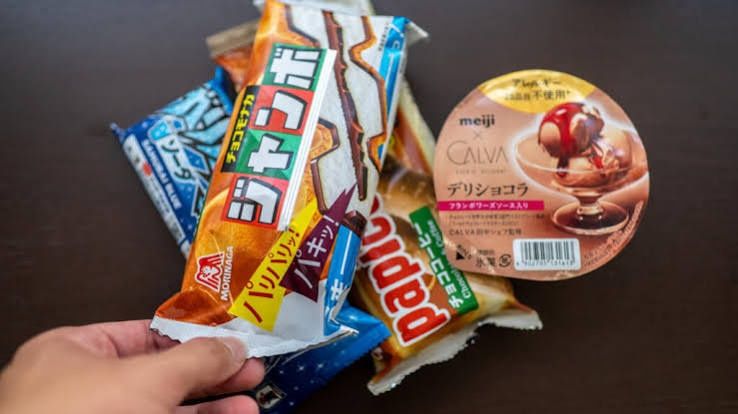
Japan's Fair Trade Commission has moved decisively against suspected anticompetitive behaviour in the ice cream sector, conducting raids on six of the country's largest manufacturers this week amid allegations that the firms conspired to artificially inflate consumer prices. The enforcement action marks an unusual step for Japanese authorities and signals heightened scrutiny of collusive pricing practices as the summer season approaches, traditionally one of the most profitable periods for frozen dessert makers.
The investigation centres on allegations that officials at Meiji Co., Morinaga Milk Industry Co., Lotte Co., Ezaki Glico Co., Morinaga & Co., and Akagi Nyugyo Co. engaged in years of coordination to control the timing and magnitude of retail price increases. According to sources familiar with the matter, the suspected coordination involved direct communication through email correspondence and in-person meetings where company representatives allegedly discussed and aligned their pricing strategies. This type of horizontal collusion—where competitors agree to move prices in tandem—represents a textbook violation of competition law across most jurisdictions, including Japan.
The pattern of suspicious behaviour appears to have crystallised around 2022, when local media observations noted that all six firms began raising their retail prices in remarkably synchronised fashion. This annual timing synchronisation across multiple large competitors raised red flags among regulators and industry observers, suggesting that the price movements were unlikely to reflect independent business decisions responding to market conditions. The JFTC appears to have accumulated sufficient evidence through preliminary investigation to justify the dramatic step of conducting simultaneous raids on the head offices of all six companies on Tuesday.
Beyond the basic allegation of price coordination, the JFTC investigation extends to a more sophisticated question about whether these firms exploited inflationary conditions as convenient cover for price increases that far exceeded the actual rise in their raw material costs. This distinction matters considerably because companies facing genuinely elevated ingredient expenses face legitimate justification for passing costs to consumers. However, if manufacturers used inflation as a smokescreen to implement disproportionate markups, this represents an additional layer of consumer harm and anticompetitive abuse of an external economic shock.
The ice cream market provides a particularly apt arena for such investigation, given the sector's concentrated structure dominated by a handful of large players. With six firms controlling the bulk of Japan's ice cream market, the potential for coordinated behaviour is heightened compared to more fragmented industries. When competitors are limited in number and produce largely substitutable products, the incentives and opportunities for collusion intensify significantly, which is precisely why competition authorities maintain particular vigilance over such sectors.
All six companies have issued formal statements confirming that JFTC officials conducted on-site inspections at their headquarters and pledging their full cooperation with the investigation. Akagi Nyugyo's statement specifically came from company official Natsuyo Suzuki, underscoring the seriousness with which management is treating the enforcement action. These cooperative postures suggest the companies recognise the gravity of the allegations and understand that resistance would only compound their regulatory exposure. In Japan's corporate culture, public commitment to regulatory compliance is also important for maintaining stakeholder confidence.
The financial stakes for the ice cream industry have never been higher. During the fiscal year ending in March, Japanese ice cream sales reached a record high exceeding 660 billion yen, driven substantially by the country's extraordinary summer heat that year—the hottest since temperature records began in 1989. Such exceptional market conditions typically generate significant profits for established competitors, creating powerful financial incentives for firms to protect their revenue through coordinated behaviour rather than competing aggressively for market share. The timing of the JFTC investigation thus coincides with a period of unprecedented profitability in the sector.
For Malaysian and Southeast Asian readers, this case illustrates an important principle about competition enforcement that applies across the region. Cartel behaviour rarely remains hidden indefinitely; the synchronised pricing patterns that benefit colluding firms in the short term eventually attract regulatory attention and trigger formal investigation. More broadly, the willingness of Japanese authorities to take enforcement action against household-name companies demonstrates that no firm is too large or too politically connected to face competition law consequences when evidence of collusion emerges. This sets a standard for regulatory assertiveness that should inform corporate compliance practices throughout the region.
The potential consequences for the companies involved are substantial. If the JFTC determines that a cartel existed, it possesses authority to mandate improvements to the companies' business practices—effectively forcing them to implement compliance programmes and structural reforms to prevent future violations. Additionally, the watchdog can impose financial penalties that scale with the severity of the violation and the duration of the illegal conduct. For firms operating across multiple jurisdictions, a cartel finding in Japan also creates precedent and evidence that may attract enforcement attention from authorities in other countries where these same companies operate.
The broader implications extend beyond the six firms and the ice cream category. The JFTC's aggressive stance signals renewed commitment to detecting and punishing cartels at a time when inflationary pressures have prompted many firms to raise prices. Regulators globally have grown attentive to the possibility that some price increases attributed to cost-push inflation actually reflect demand-pull dynamics or profit-maximisation by dominant firms. This investigation into whether the ice cream makers exploited inflation as cover for excessive pricing increases reflects this evolving enforcement perspective.
For consumers and competition advocates in Japan, the enforcement action represents vindication of concerns raised about price synchronisation in the ice cream market. The ability to challenge large, established companies through formal regulatory mechanisms reinforces the principle that competition law protections apply universally. As the investigation proceeds, it may well establish a template for how authorities examine pricing behaviour across other consumer product categories where similar synchronised increases have occurred in recent years.
Looking ahead, the investigation's progression will merit close attention from regional observers. The factual evidence the JFTC presents regarding the communications between company officials, the timing of the price increases, and the magnitude of those increases relative to cost increases will shape how authorities across Asia approach suspected cartel cases in other industries. Southeast Asian competitors in food and beverage sectors should take particular note of how scrutiny has intensified around coordinated pricing behaviour, as comparable enforcement patterns may follow in their own jurisdictions.