Malaysia's Cabinet has formally approved the establishment of the National Tahfiz Council, a significant institutional development aimed at modernising and systematising Quranic education across the nation. Deputy Prime Minister Datuk Seri Dr Ahmad Zahid Hamidi announced the decision at the Pahang State Huffaz Gathering 2026 in Kuantan, describing the move as transformative for the estimated thousands of hafiz students pursuing religious education pathways throughout the country. The approval, granted at a recent Cabinet meeting, reflects mounting government attention to tahfiz education as a legitimate and integrated component of Malaysia's broader educational ecosystem.
Ahmad Zahid, who has been appointed chairman of the council by Prime Minister Datuk Seri Anwar Ibrahim, framed the establishment as essential groundwork for elevating tahfiz education beyond its traditional institutional boundaries. The council's mandate extends across standardising curriculum content, defining recognition benchmarks, and creating coherent academic trajectories that permit hafiz students to transition seamlessly between different educational levels and vocational opportunities. This institutional framework addresses longstanding concerns within the tahfiz sector regarding inconsistent standards, limited career pathways, and the absence of formal qualifications recognised within Malaysia's mainstream education and employment systems.
The broader vision underpinning the National Tahfiz Council reflects a strategic reorientation toward integrating religious education with professional development. Ahmad Zahid articulated this perspective explicitly, emphasising that tahfiz students must have the capacity to progress from memorisation-focused study in madrasahs toward university education, acquire contemporary skills, and ultimately enter professional careers with marketable credentials and expanded opportunities. This approach acknowledges that huffaz—those who have memorised the Quran—represent a distinct educational cohort whose advancement has historically been constrained by limited formal recognition and few formalised bridges to secular employment sectors.
Pahang State has emerged as a demonstration province for integrated tahfiz education architecture. The state government, under the inspiration of the Sultan of Pahang Al-Sultan Abdullah Ri'ayatuddin Al-Mustafa Billah Shah, has constructed a comprehensive pathway beginning with Tadika Tahfiz Negeri Pahang, kindergarten-level Quranic programmes designed to instil early attachment to Quranic study. From this foundation, Pahang has developed a sequenced educational trajectory that extends through primary and secondary schooling and culminates in internationally competitive tahfiz programmes. Ahmad Zahid cited Pahang's model as empirical evidence that tahfiz education can function as a coherent knowledge system rather than a peripheral specialisation, offering meaningful intellectual and professional development for participants.
The National Tahfiz Policy 2.0 represents the operational framework within which the council will function. This policy initiative encompasses multiple substantive programmes designed to enhance tahfiz education's integration with Malaysia's wider economy and educational structures. The Malaysian Tahfiz Certificate 2.0 provides formal credentialing for hafiz achievement, while the Graded Hafazan Certification establishes standardised assessment protocols across institutions. The Huffaz Financing Scheme addresses financial barriers confronting tahfiz students and their families, removing economic constraints that have historically limited participation. Additionally, TVET Tahfiz programmes bridge religious and technical education by combining Quranic expertise with vocational skills training, enabling graduates to serve both community religious needs and broader economic sectors.
Strategic collaboration with Malaysia's higher education and skills development ecosystem constitutes another significant pillar of the Policy 2.0 implementation. By establishing formal partnerships between tahfiz institutions and universities, polytechnics, and skills institutes, the framework creates institutional pathways that previously did not exist. Huffaz can now pursue tertiary qualifications in Islamic studies, education, social services, and technical disciplines, leveraging their Quranic foundation while acquiring contemporary expertise. The Malaysian Tahfiz Recognition Standard ensures that educational credentials earned through tahfiz pathways receive consistent validation across institutions and employers, resolving previous credibility gaps.
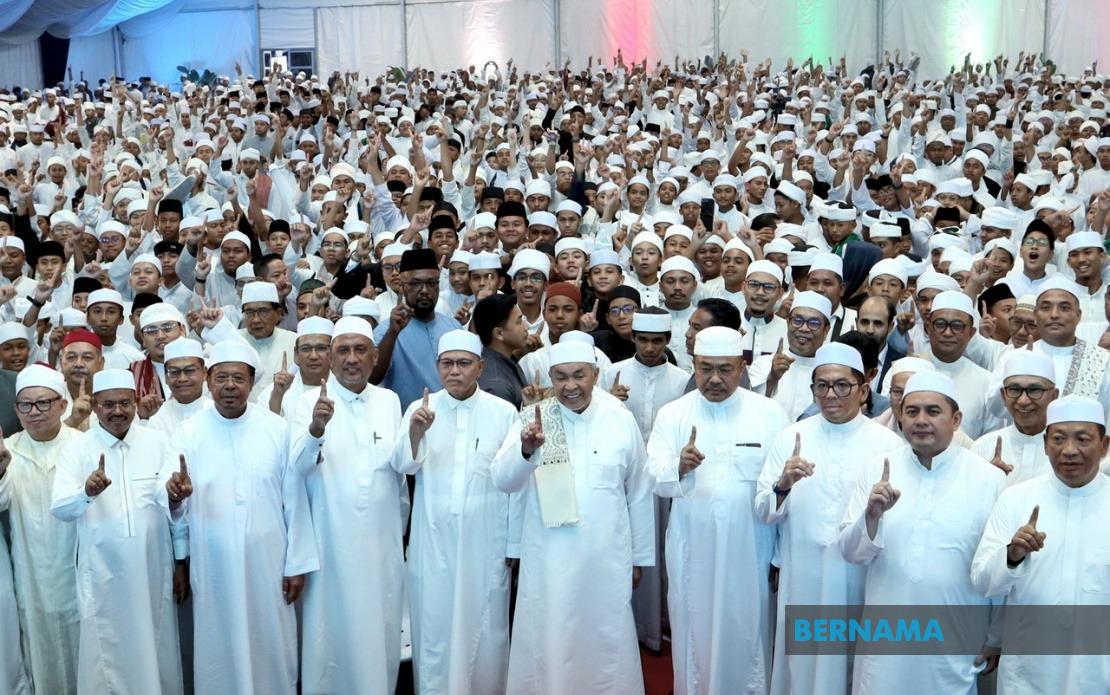
The inaugural Pahang State Huffaz Gathering 2026 convened more than five thousand hafiz participants, illustrating the substantial demographic engaged in Quranic memorisation education across a single state. This concentration suggests that nationwide establishment of standardised pathways and recognition mechanisms addresses genuine demand from students, families, and institutions. The gathering functioned simultaneously as a demonstration of tahfiz education's vibrancy and as a platform for announcing coordinating institutional structures. Witness to the event was the signing of a memorandum of understanding between Yayasan Pahang, the Community Development Department (KEMAS), and Majlis Amanah Rakyat (MARA), formalising inter-agency cooperation for tahfiz education development and skills training expansion.
This coordination among multiple government agencies underscores recognition that tahfiz education advancement requires cross-sectoral engagement. KEMAS, primarily responsible for community development initiatives, and MARA, which focuses on bumiputera economic advancement and skills training, represent institutions with distinct mandates converging on tahfiz education support. MARA's involvement carries particular significance, suggesting that tahfiz graduates are being positioned as candidates for technical and entrepreneurial development programmes previously reserved for secular vocational students. The tripartite memorandum signals structural embedding of tahfiz pathways within Malaysia's existing skills development and social advancement infrastructure.
For Southeast Asian context, Malaysia's institutionalisation of tahfiz education standards addresses challenges confronting Quranic memorisation programmes throughout the region. Indonesia, Brunei, and Thailand each maintain tahfiz student populations facing similar issues of credential recognition and career pathway limitations. Malaysia's National Tahfiz Council framework offers a potential institutional model adaptable to regional circumstances, establishing how governments can formalise religious education without secularising it. The emphasis on integration rather than segregation—ensuring tahfiz students can access university education and professional employment—represents a pragmatic approach to reconciling religious scholarship with modern economic participation.
The appointment of Ahmad Zahid as council chairman carries administrative implications. As Rural and Regional Development Minister overseeing broad development agendas, his leadership positions tahfiz education within mainstream national development frameworks rather than treating it as a specialised religious sector concern. This placement reflects understanding that tahfiz education affects community development, human capital formation, and social cohesion across Malaysia's heartland regions. Ahmad Zahid's dual role signals that tahfiz pathways are understood as contributing to broader rural and regional development objectives, not merely religious preservation.
Implementation timeline for National Tahfiz Policy 2.0 improvements has commenced this year, indicating that the institutional scaffolding will materialise relatively rapidly. Universities and skills institutes must now formally engage with tahfiz institutions to develop joint programmes, create articulation agreements, and establish mutual recognition protocols. Financing mechanisms must be operationalised to ensure hafiz students can access educational progression without economic impediment. The Malaysian Tahfiz Recognition Standard must be promulgated and adopted by educational institutions and employers. Each component requires coordination among previously disconnected institutional sectors, suggesting a demanding but purposeful implementation agenda.
The structural coherence Ahmad Zahid envisioned—from early childhood Quranic exposure through madrasah study, university education, skills acquisition, and professional employment—represents a holistic educational philosophy extending beyond narrow credentialism. This vision acknowledges that tahfiz students constitute a valuable human resource pool whose talents have been inadequately channelled into national productive capacity. By creating legitimate pathways for huffaz to become university graduates, skilled professionals, and community leaders, Malaysia positions Quranic scholarship as compatible with, rather than antagonistic to, economic development and social modernisation. The National Tahfiz Council thus represents not merely bureaucratic restructuring but strategic recognition that religious education and national development can be mutually reinforcing objectives.