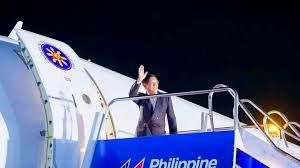
Philippine President Ferdinand R. Marcos Jr departed Manila late on Tuesday (June 16) bound for Kazan, Russia, to chair his country's engagement at the Asean-Russia Commemorative Summit while also securing a bilateral meeting with Russian President Vladimir Putin. The presidential aircraft left Villamor Airbase in Pasay City shortly after 11:55 pm, carrying Marcos and his delegation to what marks a significant diplomatic moment for the Philippines and the broader Southeast Asian region.
The summit represents a milestone in regional diplomacy, commemorating 35 years of formal ties between the Association of Southeast Asian Nations and Russia. For Marcos personally, the visit holds additional weight as it marks his inaugural trip to Russia while simultaneously allowing Manila and Moscow to acknowledge five decades of bilateral diplomatic relations, formally established on June 2, 1976. The convergence of these anniversaries underscores the historical continuity and evolving strategic importance of Philippine-Russian engagement at both the regional and bilateral levels.
As chair of Asean for 2023, Marcos has positioned the Philippines to facilitate substantive dialogue between the ten-member regional bloc and Russia on matters spanning nearly every sector of mutual concern. The summit agenda encompasses peace and security frameworks, commercial investment opportunities, critical issues around food and energy supply chains, scientific and technological cooperation, digital economy advancement, educational exchanges, tourism development, and cultural interactions between peoples. This comprehensive scope reflects the complexity of modern regional engagement and the recognition that prosperity depends on multifaceted cooperation extending well beyond traditional diplomatic channels.
The energy and food security discussions carry particular resonance for Malaysian audiences and broader Southeast Asia, where supply vulnerabilities and price volatility remain persistent concerns affecting household budgets and industrial competitiveness. Global economies continue navigating inflationary pressures and geopolitical complications that have disrupted traditional energy markets and agricultural trade flows. Marcos has emphasized that conversations addressing these everyday concerns—from fuel pricing to food affordability—directly impact Filipino families and, by extension, the stability of the region's economic landscape.
Marcos reiterated his administration's commitment to what Asean terms its "centrality" in regional architecture, a diplomatic concept emphasizing the bloc's role as a neutral, inclusive platform for managing great-power competition without forcing member states into rigid alignments. Under the Philippines' chairmanship theme, "Navigating Our Future, Together," Manila seeks to champion Asean unity and solidarity while promoting an open, rule-based regional order anchored in international law. This framing positions Asean—and the Philippines within it—as advocates for multilateralism and institutional frameworks rather than unilateral power projection during a period of significant geopolitical tension.
The bilateral discussions between Marcos and Putin assume considerable strategic importance given the broader context of Russia's international positioning and its relationships within Asia-Pacific. Beyond ceremonial acknowledgment of the 50-year diplomatic milestone, talks will concentrate on practical areas where Manila and Moscow perceive aligned interests, particularly regarding energy sourcing, pricing mechanisms, food supply security, and potentially infrastructure collaboration. The Philippines' geographic vulnerability to energy import dependence and its significant agricultural sector make these discussions consequential for domestic policy formation.
First Lady Liza Araneta-Marcos underscored the compressed timeline of her husband's mission through a social media statement, noting that despite a combined 26-hour flight duration, the President would spend approximately 38 hours in Russia. Her emphasis on the significance of "every hour" when discussions address issues directly affecting Filipino families—food costs, energy prices, fuel affordability—reflected the administration's messaging that this diplomatic undertaking, while brief, carries outsized importance relative to the time invested. Such framing justifies the substantial journey and signals to domestic audiences the prioritization placed on these engagement opportunities.
The summit scheduled for June 17 and 18 in Kazan will culminate in the adoption of formal documents outlining cooperation frameworks between Asean and Russia across identified priority areas. These instruments typically establish working groups, information-sharing mechanisms, and political commitments to deepen engagement in specific sectors. For the Philippines as summit chair, the production of substantive outcomes validates the diplomatic effort and provides tangible evidence of advancing the regional interests Marcos has articulated.
For Southeast Asia more broadly, the summit signals continued Russian engagement with the region despite international sanctions and geopolitical isolation resulting from the Ukraine conflict. Russia has historically maintained diplomatic and commercial ties throughout Asia-Pacific, and Asean's non-aligned tradition creates space for such engagement. The Philippines' willingness to host Russian dialogue within an Asean framework reflects broader regional dynamics where most Southeast Asian nations prefer to avoid forced choices between great powers, instead attempting to preserve relationships and extract mutual benefits through careful diplomatic balancing.
The energy security focus carries particular relevance given volatile global commodity markets and supply-chain fragilities that have characterized the post-pandemic period. Russia remains a significant energy supplier to various markets, and discussions on stable pricing and reliable supply represent practical concerns for developing economies vulnerable to price shocks. Similarly, food security discussions acknowledge Russia and Ukraine's substantial global agricultural export roles, with disruptions in these markets directly affecting Southeast Asian food inflation and policy options.
Marcos' emphasis on rules-based regional architecture and international law reflects Philippines foreign policy orientation emphasizing institutional frameworks and multilateral approaches to managing disputes and cooperation. This positioning distinguishes his approach from more transactional bilateral arrangements, instead advocating for norms-based systems where smaller and medium powers retain voice and influence. The summit provides a platform for articulating these principles while demonstrating Asean's continuing engagement with global powers across ideological and geopolitical divides.
Ultimately, the Philippine President's mission demonstrates how individual bilateral relationships and formal regional mechanisms intertwine in contemporary Asian diplomacy. Through concurrent bilateral engagement with Putin and multilateral summit participation, Marcos attempts to simultaneously advance specific Philippine interests while fulfilling his regional leadership obligations. The outcomes will likely shape both bilateral Philippine-Russian cooperation trajectories and broader Asean positioning on critical global issues throughout the remainder of the year.